
Which Gynecomastia Treatment Is Best for You: Surgery or Medication?
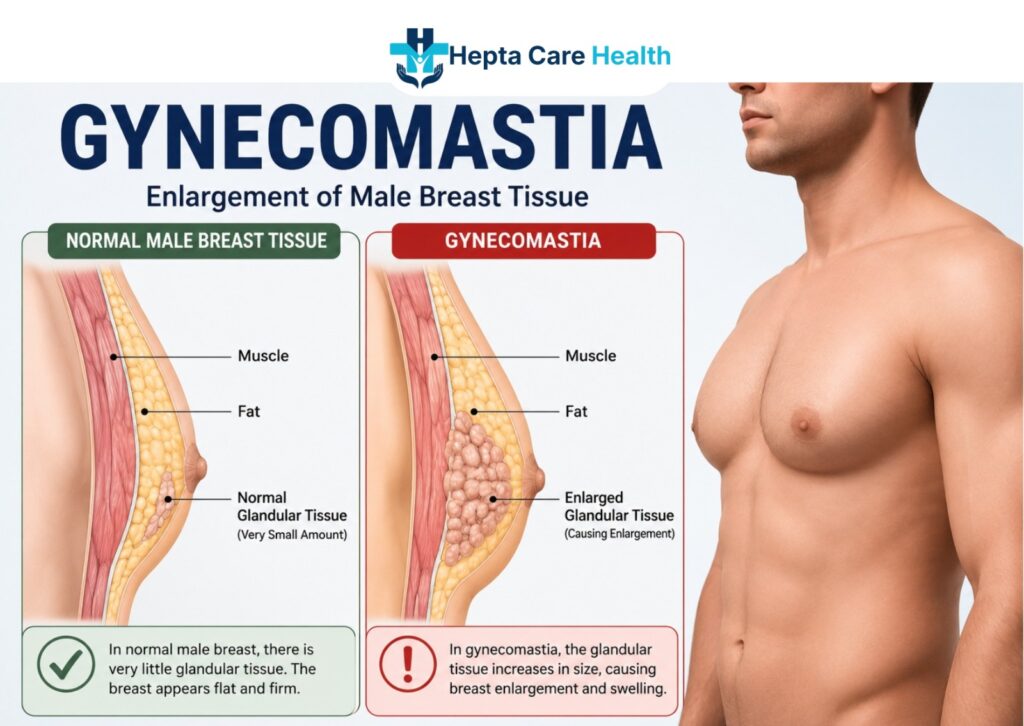
Gynecomastia is a common condition characterized by the enlargement of male breast tissue. It can affect one or both breasts and occur at any age, from infancy to older adulthood. While gynecomastia is not usually a serious medical condition, it can significantly impact self-confidence, body image, and emotional well-being.
In this comprehensive guide, we’ll explore the differences between gynecomastia surgery and medication, discuss the diagnosis and stages of gynecomastia, and help you determine which treatment option may be right for you.
70k+
Happy Patients
50+
Disease
100+
Hospitals
10+
Cities
Book Free Consultation
Free Consultation
No-Cost EMI
Support in Insurance Claim
What Is Gynecomastia?
Gynecomastia is the benign enlargement of glandular breast tissue in males. It occurs due to an imbalance between estrogen and testosterone levels.
Normally, men have small amounts of estrogen and higher levels of testosterone. When estrogen levels increase or testosterone levels decrease, breast tissue can grow, resulting in gynecomastia.
Common Symptoms of Gynecomastia
- Enlarged breast tissue
- Breast tenderness or sensitivity
- Swelling under the nipple area
- Rubbery or firm breast tissue
- Uneven breast enlargement
- Psychological discomfort and low self-esteem.
Causes of Gynecomastia
Several factors can contribute to gynecomastia, including:
Hormonal Changes
- Puberty
- Aging
- Hormonal imbalances
Medications
- Anti-androgen medications
- Steroids
- Antidepressants
- Certain heart medications
- Some ulcer medications
Medical Conditions
- Liver disease
- Kidney disease
- Hyperthyroidism
- Testicular disorders
- Obesity
Lifestyle Factors
- Alcohol consumption
- Recreational drug use
- Anabolic steroid abuse
Diagnosis of Gynecomastia
Accurate diagnosis is essential before deciding on the appropriate treatment.
Medical History Evaluation
Your doctor may ask about:
- Symptoms and duration
- Medication history
- Family medical history
- Lifestyle habits
- Existing medical conditions
Physical Examination
A physician examines:
- Breast tissue
- Nipple area
- Chest contour
- Presence of lumps or tenderness
Blood Tests
Blood tests help evaluate hormone levels, including:
- Testosterone
- Estrogen
- Thyroid hormones
- Liver function
- Kidney function
Imaging Tests
Ultrasound
Used to evaluate breast tissue and distinguish between fat and glandular tissue.
Mammography
May be recommended to rule out male breast cancer or other abnormalities.
CT Scan or MRI
In certain cases, advanced imaging may be needed to identify underlying causes.
Biopsy
Rarely required but may be performed if cancer is suspected.
Stages of Gynecomastia
Grade 1: Mild Gynecomastia
Characteristics
- Small breast enlargement
- No excess skin
- Minimal glandular tissue
Best Treatment
- Observation
- Lifestyle changes
- Medication (in select cases)
Grade 2: Moderate Gynecomastia
Characteristics
- Noticeable breast enlargement
- Minimal excess skin
- Moderate glandular tissue growth
Best Treatment
- Medication during early stages
- Surgery for persistent cases
Grade 3: Moderate to Severe Gynecomastia
Characteristics
- Significant breast enlargement
- Visible chest contour changes
- Excess skin may be present
Best Treatment
- Surgery is usually recommended
Grade 4: Severe Gynecomastia
Characteristics
- Small breast enlargement
- No excess skin
- Minimal glandular tissue
Best Treatment
- Observation
- Lifestyle changes
- Medication (in select cases)
Gynecomastia Treatment Options
The two primary treatment approaches are medication and surgery.
Gynecomastia Medication Treatment
Medication is generally most effective during the early stages of gynecomastia, particularly when the condition is caused by hormonal imbalance.
Common Medications Used
Selective Estrogen Receptor Modulators (SERMs)
Examples:
- Tamoxifen
- Raloxifene
These medications block estrogen’s effects on breast tissue.
Aromatase Inhibitors
Examples:
- Anastrozole
These drugs reduce estrogen production in the body.
Testosterone Replacement Therapy
Used when low testosterone levels are contributing to gynecomastia.
Uses of Medication for Gynecomastia
Medication may be suitable for:
- Early-stage gynecomastia
- Pubertal gynecomastia
- Hormone-related breast enlargement
- Mild to moderate cases
- Patients not eligible for surgery
Benefits of Medication
Non-Surgical Option
No incisions or surgical recovery.
Lower Initial Cost
Generally less expensive than surgery.
Early Intervention
May prevent progression if started promptly.
Hormonal Correction
Addresses underlying hormonal imbalances.
Minimal Downtime
Patients can usually continue daily activities.
Limitations of Medication:
Reduced Effectiveness in Long-Standing Cases
Medication is less effective when breast tissue has become fibrous.
Results May Take Time
Improvement may require several months.
Possible Side Effects
Potential side effects include:
- Mood changes
- Fatigue
- Hot flashes
- Headaches
Recurrence Risk
Symptoms may return after stopping medication if the underlying cause persists.
Gynecomastia Surgery
Gynecomastia surgery is considered the gold standard treatment for moderate to severe cases.
The procedure permanently removes excess glandular tissue and, when necessary, excess fat and skin.
Types of Gynecomastia Surgery
Liposuction:
Best for patients with excess fat and minimal glandular tissue.
Benefits:
- Smaller scars
- Faster recovery
- Improved chest contour
Excision Surgery:
Used when glandular tissue must be removed.
Benefits:
- Permanent tissue removal
- Effective for dense breast tissue
- Excellent cosmetic results
Combination Procedure:
Many patients require both liposuction and gland excision.
Benefits:
- Comprehensive correction
- Natural-looking chest contour
- Enhanced aesthetic outcomes
Uses of Gynecomastia Surgery:
Surgery is commonly recommended for:
- Grade 2, 3, and 4 gynecomastia
- Persistent gynecomastia
- Long-standing breast enlargement
- Patients seeking permanent results
- Cases causing psychological distress
Benefits of Gynecomastia Surgery:
Permanent Results
Removed glandular tissue does not typically return.
Immediate Improvement
Patients notice visible chest contour improvements soon after recovery.
Higher Success Rate
Surgery offers predictable and consistent outcomes.
Improved Self-Confidence
Many patients report significant improvements in self-esteem.
Better Clothing Fit
A flatter chest often improves comfort and appearance in clothing.
Enhanced Physical Appearance
Provides a more masculine chest contour.
Risks and Disadvantages of Surgery
Like any procedure, surgery carries certain risks.
Possible Complications
- Swelling
- Bruising
- Infection
- Scarring
- Temporary numbness
- Asymmetry
However, complications are uncommon when performed by experienced surgeons.
Who Should Consider Medication?
Medication may be ideal if:
- Symptoms are recent
- Hormonal imbalance is present
- Gynecomastia is mild
- You prefer non-surgical treatment
- Your doctor recommends hormone management
Who Should Consider Surgery?
Surgery may be the better choice if:
- Gynecomastia has been present for over 12 months
- The condition is moderate to severe
- Excess skin is present
- Medication has not worked
- You desire permanent results
Recovery After Gynecomastia Surgery
Recovery typically includes:
First Week
- Mild swelling
- Compression garment use
- Limited physical activity
Weeks 2–4
- Return to light activities
- Reduced swelling
Weeks 4–6
- Resume exercise
- Improved chest contour
Final Results
Usually visible within 3–6 months.
Why Choose Heptacare Health for Gynecomastia Treatment?
Heptacare Health helps patients connect with experienced plastic surgeons and trusted hospitals for gynecomastia treatment.
Benefits of Choosing Heptacare Health
- Free consultation with specialists
- Access to experienced surgeons
- Assistance in selecting the right hospital
- Guidance on treatment costs
- No-Cost EMI and financing support
- End-to-end treatment coordination
- Transparent treatment information
- Personalized patient assistance
Frequently Asked Questions
Pubertal gynecomastia may resolve naturally within 6 months to 2 years. Persistent cases often require medical evaluation.
Yes, surgery provides long-lasting and often permanent results when performed correctly and healthy lifestyle habits are maintained.
Exercise may reduce chest fat but cannot eliminate glandular breast tissue.
Most surgeons recommend waiting until breast development stabilizes, usually after adolescence.
Gynecomastia is generally not dangerous but should be evaluated to rule out underlying medical conditions.
Conclusion
Choosing between gynecomastia medication and surgery depends on the severity, stage, duration, and underlying cause of the condition. Medication may be effective for early-stage, hormone-related gynecomastia, while surgery remains the most effective and permanent solution for moderate to severe cases.
A proper diagnosis and evaluation by a qualified healthcare professional are essential to determine the most suitable treatment plan. By understanding the stages of gynecomastia, treatment options, benefits, and limitations, patients can make informed decisions and achieve the best possible outcomes for both their physical appearance and confidence.
©2019. Elements Kit. All Rights Reserved.

Company
Subscribe Now
Don’t miss our future updates! Get Subscribed Today!
@2026 HeptaCare Health- heptacarehealth.com

 The coordinator will understand your symptoms and health condition in detail
 Your consultation will be scheduled at the earliest.