
PCOS or PCOD in Women – Causes, Symptoms & Natural Ways to Manage It
Polycystic Ovary Syndrome (PCOS) and Polycystic Ovarian Disease (PCOD) are among the most common hormonal disorders affecting women of reproductive age. These conditions can impact menstrual cycles, fertility, metabolism, weight management, and overall health.
Although the terms PCOS and PCOD are often used interchangeably, they are not exactly the same. Both conditions involve hormonal imbalances and ovarian dysfunction, but PCOS is generally considered a more complex endocrine disorder that may require long-term management.
The good news is that with proper lifestyle changes, medical guidance, and natural management strategies, many women can successfully manage symptoms and improve their quality of life.
In this comprehensive guide, we’ll explore the causes, symptoms, diagnosis, treatment options, dietary changes, and the best natural remedies for managing PCOS and PCOD.
70k+
Happy Patients
50+
Disease
100+
Hospitals
10+
Cities
Book Free Consultation
Free Consultation
No-Cost EMI
Support in Insurance Claim
What Is PCOD?
Polycystic Ovarian Disease (PCOD) is a condition in which the ovaries produce immature or partially mature eggs that eventually turn into cysts.
These cysts can cause hormonal imbalances and lead to irregular menstrual cycles.
Key Characteristics of PCOD
- Multiple ovarian cysts
- Irregular periods
- Weight gain
- Acne
- Excess hair growth
- Fertility challenges
PCOD is relatively common and can often be managed effectively through lifestyle modifications.
What Is PCOS?
Polycystic Ovary Syndrome (PCOS) is a hormonal and metabolic disorder characterized by elevated androgen (male hormone) levels, irregular ovulation, and polycystic ovaries.
PCOS can affect multiple body systems and is associated with long-term health risks.
Key Characteristics of PCOS
- Irregular or absent periods
- Hormonal imbalance
- Insulin resistance
- Infertility
- Obesity
- Increased risk of diabetes
Causes of PCOS and PCOD
The exact cause is not fully understood, but several factors contribute to the development of these conditions.
1. Hormonal Imbalance
Elevated androgen levels can interfere with normal ovulation and egg development.
2. Insulin Resistance
Many women with PCOS have insulin resistance, meaning the body cannot effectively use insulin.
This causes:
Increased blood sugar levels
Weight gain
Higher androgen production
3. Genetics
Family history may increase the likelihood of developing PCOS or PCOD.
Women whose mothers or sisters have PCOS are often at greater risk.
4. Chronic Inflammation
Low-grade inflammation may stimulate the ovaries to produce excess androgens.
5. Lifestyle Factors
Certain habits may worsen symptoms:
- Sedentary lifestyle
- Poor diet
- Excessive sugar intake
- Chronic stress
- Inadequate sleep
Symptoms of PCOS and PCOD
Symptoms vary among individuals and can range from mild to severe.
Menstrual Symptoms
- Irregular periods
- Missed periods
- Heavy menstrual bleeding
- Delayed menstrual cycles
Reproductive Symptoms
- Difficulty conceiving
- Irregular ovulation
- Infertility
Skin and Hair Symptoms
- Acne
- Oily skin
- Excess facial hair
- Excess body hair
- Hair thinning
- Male-pattern baldness
Weight-Related Symptoms
- Unexplained weight gain
- Difficulty losing weight
- Increased abdominal fat
Emotional Symptoms
- Anxiety
- Mood swings
- Depression
- Low self-esteem
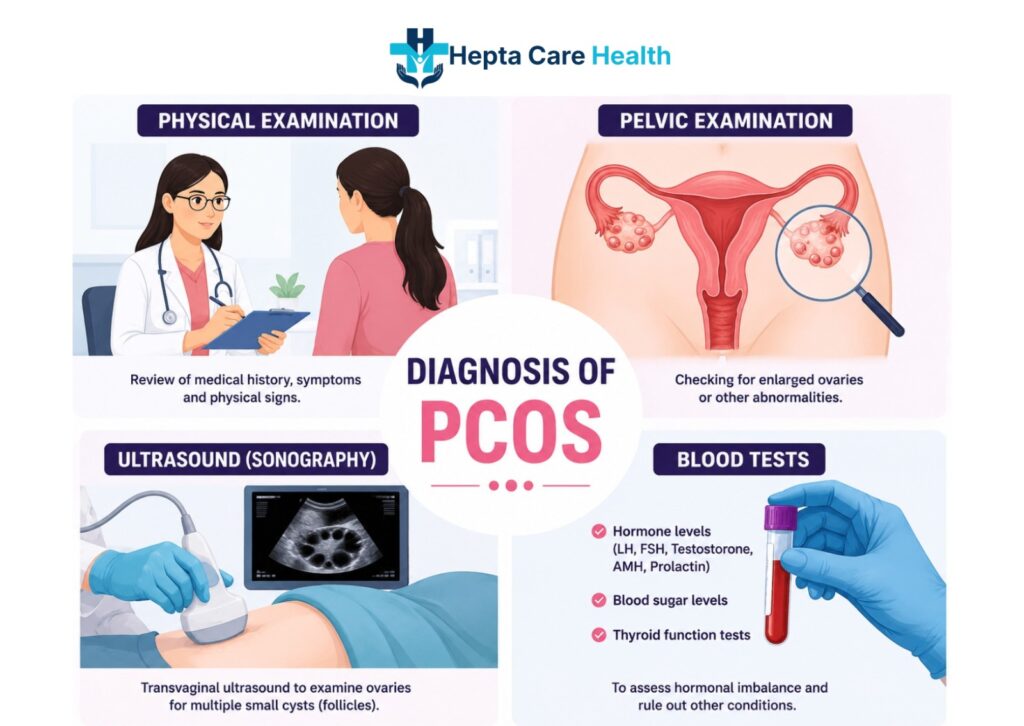
Diagnosis of PCOS and PCOD
Early diagnosis can help prevent complications.
Medical History
Doctors may assess:
- Menstrual patterns
- Family history
- Fertility concerns
- Weight changes
Physical Examination
A healthcare provider may evaluate:
- Body weight
- Blood pressure
- Hair growth patterns
- Skin condition
Blood Tests
Tests may include:
- Testosterone levels
- Insulin levels
- Blood sugar levels
- Thyroid function tests
- Hormone profile
Pelvic Ultrasound
Ultrasound helps identify:
- Enlarged ovaries
- Multiple ovarian cysts
- Ovulation abnormalities
Complications of Untreated PCOS
Without proper management, PCOS can increase the risk of:
- Type 2 diabetes
- High blood pressure
- Heart disease
- Sleep apnea
- Infertility
- Endometrial cancer
- Pregnancy complications
Treatment Options for PCOS and PCOD
Treatment depends on symptoms, age, and reproductive goals.
Lifestyle Modifications
Lifestyle changes are often the first line of treatment.
Benefits
- Improved hormone balance
- Better insulin sensitivity
- Weight management
- Improved fertility
Medications
Doctors may prescribe:
- Birth control pills
- Insulin-sensitizing medications
- Fertility medications
- Anti-androgen medications
How Does Changing the Diet Impact PCOS and PCOD?
Diet plays a crucial role in managing hormonal imbalances and insulin resistance.
A healthy eating pattern can significantly improve symptoms and reduce long-term health risks.
Benefits of Dietary Changes
Improved Insulin Sensitivity
Balanced meals help regulate blood sugar levels and reduce insulin resistance.
Weight Management
Healthy eating supports sustainable weight loss, which can improve ovulation and hormone regulation.
Reduced Inflammation
Anti-inflammatory foods may help decrease hormonal disruptions.
Better Menstrual Regularity
Many women experience improved cycle regularity after making dietary changes.
Enhanced Fertility
Improved hormonal balance can increase the chances of ovulation and conception.
Best Foods for PCOS and PCOD
High-Fiber Foods
- Oats
- Whole grains
- Lentils
- Beans
- Vegetables
Lean Proteins
- Fish
- Chicken
- Eggs
- Tofu
Healthy Fats
- Nuts
- Seeds
- Avocados
- Olive oil
Low-Glycemic Foods
Brown rice
Quinoa
Sweet potatoes
Foods to Limit
Sugary drinks
Processed foods
White bread
Excessive sweets
Fried foods
What Are the Best Natural Remedies for PCOD?
Natural remedies can complement medical treatment and lifestyle modifications.
1. Regular Exercise
Physical activity improves:
Insulin sensitivity
Weight management
Hormonal balance
Recommended Activities
Walking
Cycling
Swimming
Yoga
Strength training
2. Weight Management
Even a 5–10% reduction in body weight can significantly improve symptoms.
Benefits
Improved ovulation
Better fertility
Reduced insulin resistance
3. Yoga and Meditation
Stress can worsen hormonal imbalances.
Benefits
Lower cortisol levels
Improved mental well-being
Better hormonal regulation
4. Adequate Sleep
Poor sleep may worsen insulin resistance and hormone imbalances.
Aim For
7–9 hours of quality sleep per night.
5. Hydration
Drinking enough water supports metabolism and overall health.
6. Cinnamon
Some studies suggest cinnamon may help improve insulin sensitivity.
7. Spearmint Tea
May help reduce androgen levels and excessive hair growth.
8. Omega-3 Fatty Acids
Found in:
Salmon
Walnuts
Flaxseeds
Benefits
Reduced inflammation
Better metabolic health
9. Vitamin D Optimization
Vitamin D deficiency is common in women with PCOS.
Proper levels may support hormonal health.
10. Stress Management
Stress reduction techniques may help improve hormone balance.
Uses of Early PCOS and PCOD Management:
Early intervention can provide several advantages:
Hormonal Regulation
Improves menstrual regularity and ovulation.
Fertility Improvement
Supports reproductive health and conception.
Metabolic Health
Reduces diabetes and cardiovascular risks.
Weight Management
Facilitates healthier body composition.
Emotional Well-Being
Improves confidence and mental health.
Benefits of Managing PCOS and PCOD Naturally
Better Hormonal Balance
Lifestyle modifications can improve hormone regulation.
Improved Fertility
Regular ovulation increases pregnancy chances.
Reduced Medication Dependence
Some women may reduce reliance on medications under medical supervision.
Enhanced Energy Levels
Better nutrition and exercise improve overall vitality.
Long-Term Health Protection
Helps prevent diabetes, heart disease, and obesity-related complications.
Conclusion
PCOS and PCOD are common yet manageable conditions that affect millions of women worldwide. While they can impact fertility, metabolism, and emotional well-being, early diagnosis and proactive management can significantly improve outcomes.
A combination of healthy eating, regular exercise, stress management, quality sleep, and appropriate medical care can help regulate hormones, improve menstrual cycles, enhance fertility, and reduce long-term health risks. Understanding how dietary changes impact PCOS and incorporating natural remedies into daily life can empower women to take control of their health and achieve a better quality of life.
Frequently Asked Questions
Heptacare Health supports women throughout their reproductive and hormonal health journey by connecting them with experienced gynecologists, endocrinologists, and fertility specialists.
Key Benefits
- Free consultation with doctors
- Access to experienced specialists
- Personalized treatment guidance
- Assistance in selecting the right hospital or clinic
- Fertility and reproductive health support
- End-to-end care coordination
- Transparent healthcare information
- Patient-focused support services
No. PCOD is primarily an ovarian condition, while PCOS is a broader hormonal and metabolic disorder.
There is currently no permanent cure, but symptoms can be effectively managed through lifestyle changes and medical treatment.
Diet plays a major role but often works best when combined with exercise, stress management, and medical guidance.
No. Some women with PCOS maintain a normal weight while still experiencing symptoms.
Yes. Many women with PCOS successfully conceive with proper treatment and lifestyle management.
©2019. Elements Kit. All Rights Reserved.
Company
Subscribe Now
Don’t miss our future updates! Get Subscribed Today!
@2026 HeptaCare Health- heptacarehealth.com

 The coordinator will understand your symptoms and health condition in detail
 Your consultation will be scheduled at the earliest.