Experience relief from the discomfort of tubal ligation through our minimally invasive laparoscopic procedure. Our skilled surgeons ensure a painless and efficient tubectomy, offering freedom from the worries of unwanted pregnancies. Whether for family planning or medical reasons, trust our experienced team to perform tubal ligation with precision and care.
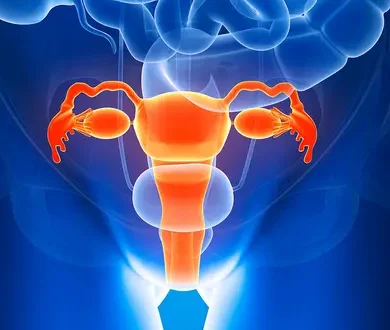
Tubectomy, also known as tubal ligation or female sterilization, is a surgical procedure to permanently prevent pregnancy by blocking or sealing the fallopian tubes. It’s a highly effective method of contraception. Tubectomy is typically recommended for individuals who have completed their family planning or wish to avoid future pregnancies. The procedure is elective and is performed under anesthesia. By blocking the fallopian tubes, sperm cannot reach the egg, preventing fertilization. Tubectomy does not affect hormone levels or menstrual cycles. It’s a safe and permanent form of birth control with minimal risks and a high success rate.
How is Tubectomy Performed?
The procedure is typically done through laparoscopy or mini-laparotomy, using small incisions to access and close the fallopian tubes. It is a short surgery with a quick recovery time.
Indications for Tubectomy
Tubectomy is indicated when a woman who doesn’t wish to conceive in the future voluntarily requests this permanent method of sterilization.
A woman considering permanent sterilization through tubectomy ought to consider the following points:
Reasons for wanting to opt for permanent sterilization
Whether tubal ligation is the best option for her
Side effects, risks and complications associated with the procedure.
Whether other methods of contraception might be more suitable
Technique
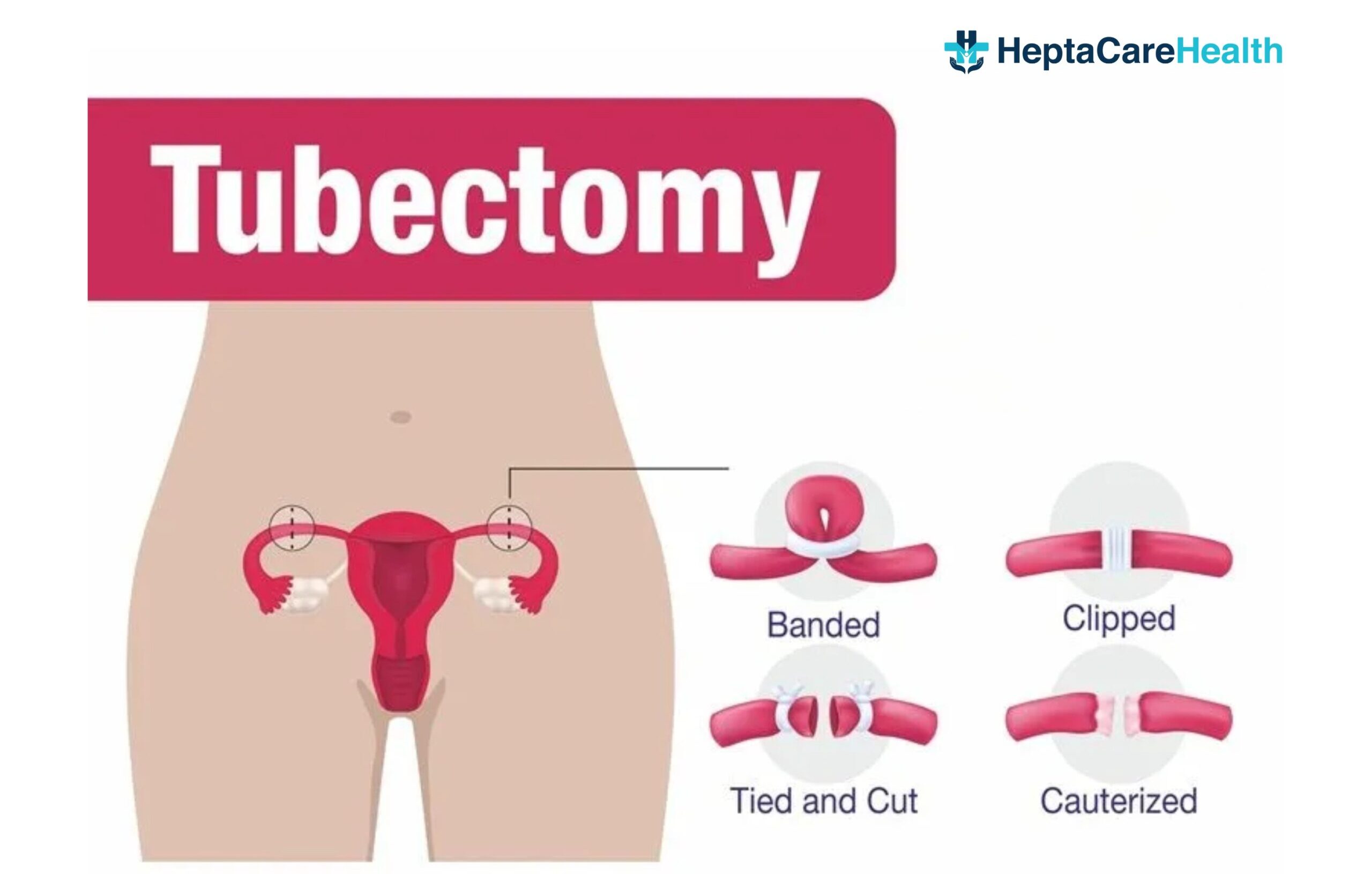
Tubectomy is a major surgical procedure in which the fallopian tubes are cut open and clipped or tied up to block the passage of the egg into the uterus.
Different Methods of Tubectomy
Bipolar coagulation- Electric current is used to sear parts of the fallopian tubes.
Monopolar coagulation- The tubes are seared using electric current. A radiating current is also used to further damage them.
Tubal clip- The fallopian tubes are blocked by permanently clipping them or tying them together.
Tubal Ring- The tube is tied using a silastic band.
Fimbriectomy- In this procedure, a section of the fallopian tube is disconnected from the ovary. This creates a gap, hampering the capacity of the tube to receive eggs and transfer them to the uterus.
Care to Be Taken After Tubectomy
It is important to follow the surgeon’s advice about care post-surgery. Some suggestions for looking after yourself well include:
Intense exercise should be avoided for a week.
Work may be resumed within a few days.
Refrain from sex for a week after the tubectomy.
Pain medication can help manage pain. However, make sure to see a doctor in case of intense pain.
Make sure to see the doctor if you experience high fever, bleeding from the cut, fainting spells, etc.
Tubectomy is a major surgery that’s irreversible and not without its set of risks. Hence, it is important to receive advice and undergo the surgery under experienced doctors only at trusted gynaecology hospitals such as Apollo Cradle.
Most patients feel only mild pain or bloating for 1–2 days, which is well managed with medicines. Compared to open surgery, laparoscopy has much less pain and scarring.
Delaying treatment can make the hernia bigger, more painful, and risk serious complications such as obstruction or strangulation, which can be life-threatening.
Yes, light walking is encouraged the same day or next day. It helps recovery and prevents complications.
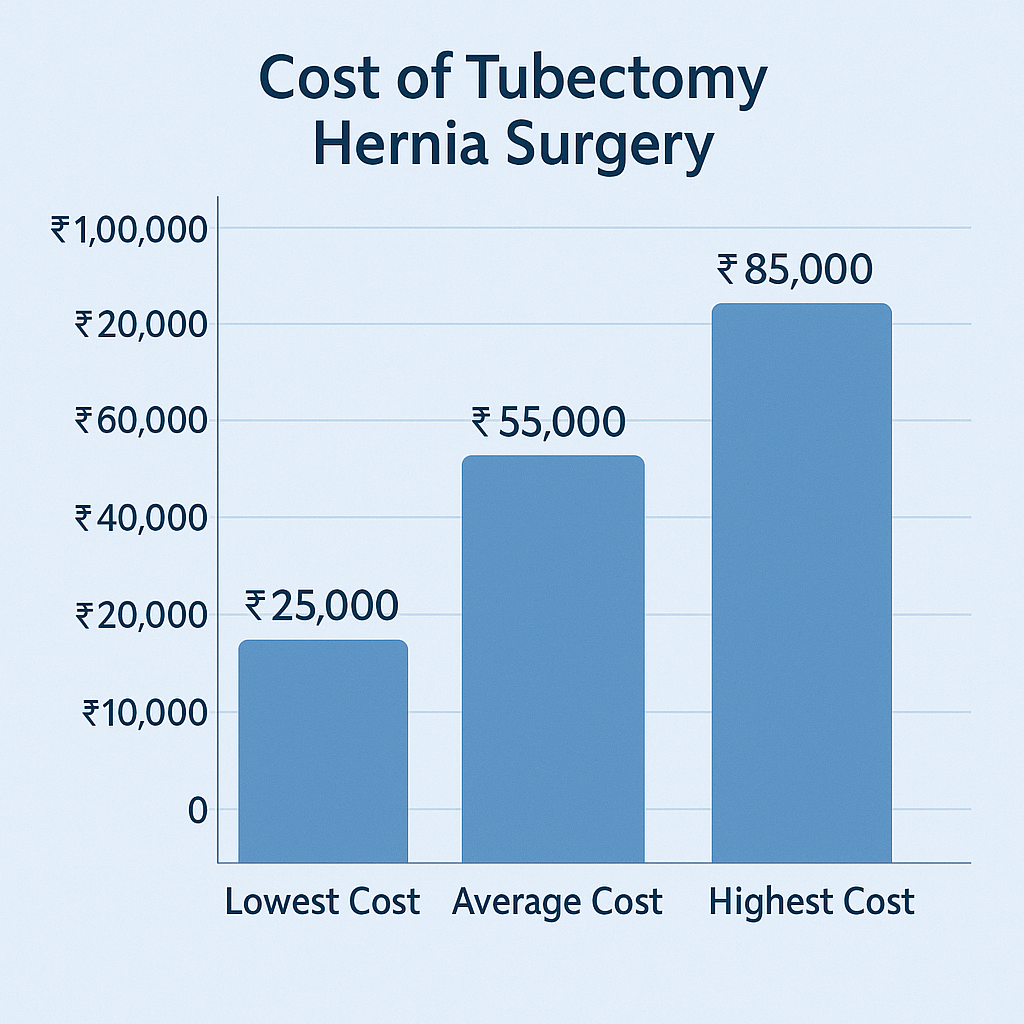
femoral hernia surgery Cost
● femoral hernia surgery cost in Vizag ● low-cost femoral hernia surgery in Hyderabad ● cashless femoral hernia treatment near me ● painless femoral hernia surgery in Vijayawada ● femoral hernia treatment with insurance in Vizag ● femoral hernia operation cost in Hyderabad ● femoral hernia surgery packages in Vijayawada ● affordable femoral hernia treatment near me ● femoral hernia laser treatment clinic in Hyderabad ● femoral hernia doctor consultation charges in Vizag ● best femoral hernia surgery cost in Vijayawada ● femoral hernia treatment hospital near me ● femoral hernia operation price in Hyderabad ● low-cost femoral hernia laser treatment in Vizag ● femoral hernia removal cost near me ● femoral hernia treatment with EMI in Vijayawada ● femoral hernia surgery specialist near me ● femoral hernia surgery packages in Hyderabad ● femoral hernia treatment clinic near me ● femoral hernia surgery near me
Disclaimer: **The result and experience may vary from patient to patient.. ***By submitting the form or calling, you agree to receive important updates and marketing communications.
Book Your FREE Consultation Now
Simplifying Surgery Experience
Consult with our expert surgeon for more than 50+ diseases